

Iron Maiden and Pophouse: The Evolution of Music Memorabilia

by Laurence Carpenter
Iron Maiden has spent five decades building one of music’s most distinctive fan and collector ecosystems. Its new partnership with Pophouse could take that world and Eddie further than ever before.
For more than 50 years, Iron Maiden has shown that enduring fandom can be built around far more than music alone. Through Eddie, its iconic album artwork, elaborately staged live shows, the Official Iron Maiden Fan Club (IMFC) and officially licensed collectibles, the band has created a universe that fans can follow, experience, and collect. Most importantly, it has created a community and a genuine sense of belonging which is really what fandom is all about.
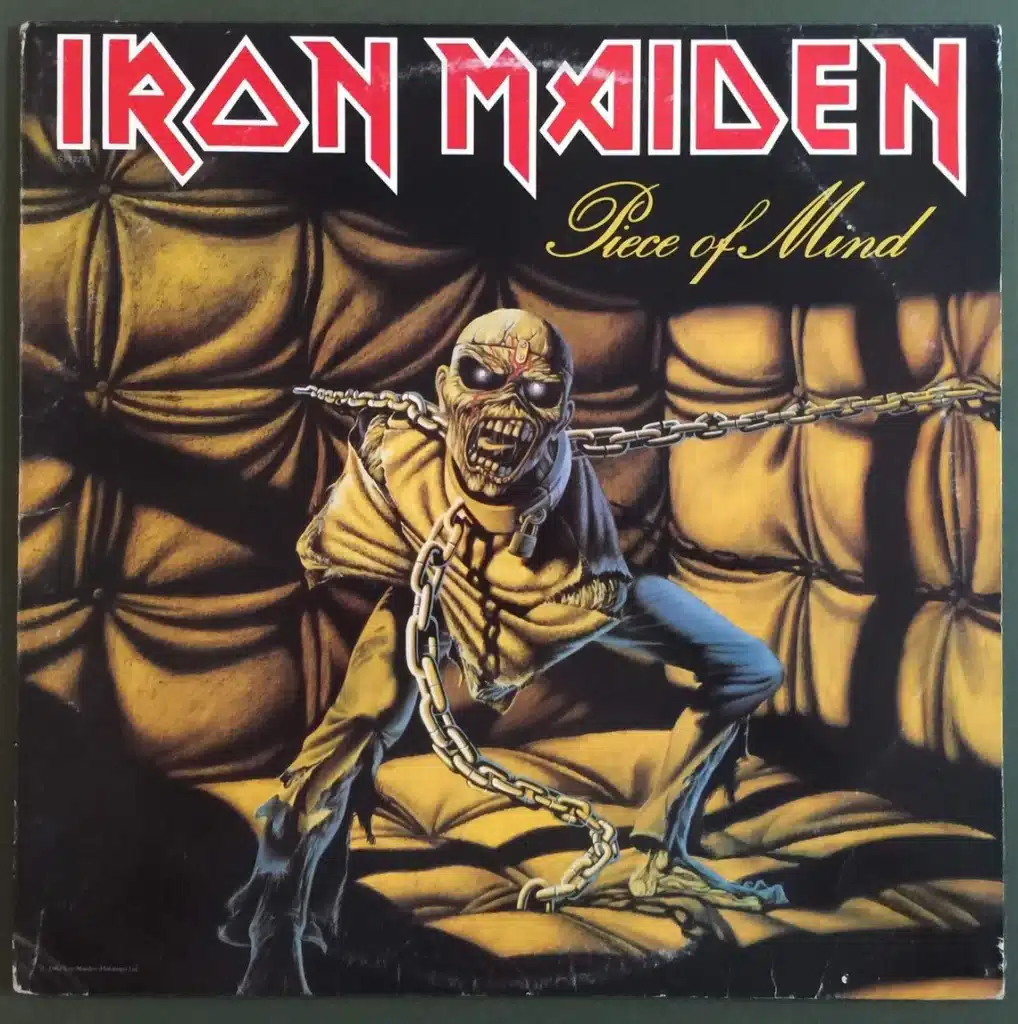
Eddie is pictured on a rare, vintage 1983 heavy metal vinyl Iron Maiden Piece of Mind record album
available on eBay.
Iron Maiden’s world has its own visual language, mythology and instantly recognizable central character. Eddie, the band’s perennial mascot, has appeared as a soldier, pharaoh, cyborg, gunslinger, and countless other incarnations. Every album and tour introduces another chapter and, from a collector’s perspective, another range of collectibles through which that chapter can be remembered.

Sponsored
The recently announced partnership between Iron Maiden and Pophouse therefore feels particularly significant. Pophouse has acquired a stake in the band’s publishing and master music rights, together with its name, image and likeness (NIL) rights. This goes considerably
further than acquiring a passive interest in a collection of songs. It gives Pophouse a stake in the wider identity and creative universe surrounding one of the most powerful brands in rock music.
More Than a Catalog Investment
Pophouse describes itself as an entertainment and music investment company, but its stated model separates it from many traditional catalog investors. Rather than relying principally on the royalties already generated by established music, it aims to add further value through what it calls “artist-centric concept development,” working alongside artists, estates, and existing stakeholders.
The company talks about combining creative and financial thinking, preserving and amplifying artistic legacies, and finding new ways to connect established artists with both existing and new audiences. In practice, its value-add approach can involve immersive entertainment, exhibitions, films, digital experiences, and new forms of storytelling. The objective is not simply to own rights, but to activate them intelligently and unlock additional value from the wider intellectual property.
That philosophy has an unusually credible artistic foundation. Pophouse was co-founded in 2014 by Conni Jonsson, founder of the investment organization EQT, and Björn Ulvaeus of ABBA. Ulvaeus is not merely a figurehead attached to the company: he is a songwriter and artist who has spent decades considering how music, narrative, theater, and technology can work together.
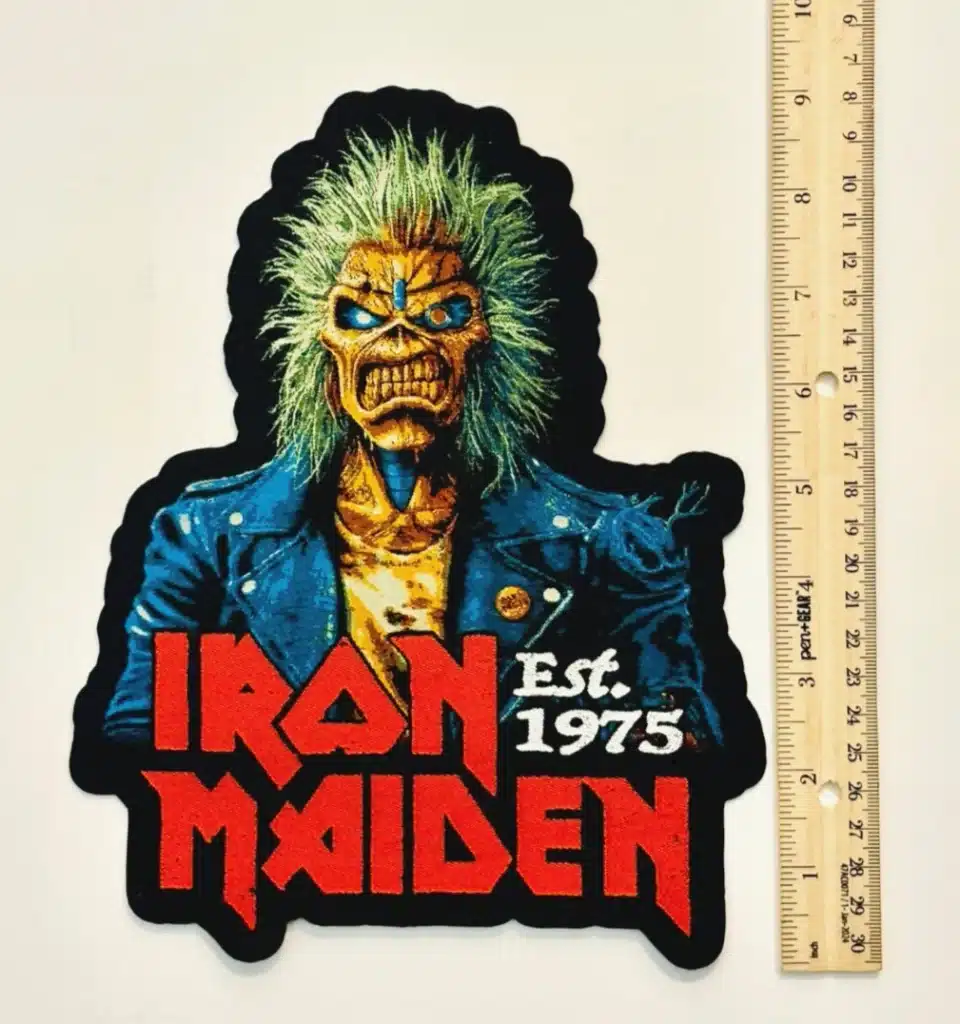
“Iron Maiden – Est. 1975”
woven patch.
Pophouse was the founding investor in ABBA Voyage, the pioneering London concert experience developed with all four members of ABBA. According to Pophouse, the production has now sold three million tickets. Its wider portfolio also includes ABBA The Museum and the Avicii Experience in Stockholm, both of which transform music history into something audiences can physically enter, explore, and connect with their beloved artists.
The comparison most relevant to Iron Maiden may be KISS. In 2024, Pophouse acquired KISS’s music catalog, brand name and intellectual property, including the band’s distinctive face paint designs and trademarks. Plans include an avatar show, a biopic, and a themed KISS experience.
Like Iron Maiden, KISS has always existed as both a musical act and a highly visual, collectible property. Its costumes, characters, stagecraft, and merchandise are fundamental parts of how its audience experiences the band.
Pophouse’s involvement with these artists demonstrates why its partnership with Iron Maiden offers so much potential. It has already shown that it can approach a musical legacy as a living cultural property rather than a static collection of recordings.

photo: https://www.easyliveauction.com
Iron Maiden’s Existing Fan Economy
Pophouse is not being asked to create an Iron Maiden universe from scratch. Much of the necessary architecture is already there. The Official Iron Maiden Fan Club (IMFC) is a particularly important part of it. Membership offers access to ticket presales, fan club exclusive merchandise, competitions, digital editions of the fan club magazine, and the “First to the Barrier” draw, which gives selected members first entry at participating concerts. Members also receive a discount across much of the official store.

Sponsored
These benefits do more than encourage sales. They recognize and reward commitment. The IMFC gives the band a direct relationship with the most engaged part of its audience and gives those fans a stronger sense of belonging. In an increasingly fragmented entertainment market, that direct connection is enormously valuable.
This is what I mean by the new fan economy. It is not simply the sale of more merchandise. It is an ecosystem in which access, experience, community, and collectability reinforce one another. A concert ticket may lead to fan club membership; membership may provide access to an exclusive collectible; that collectible becomes a physical record of participation in a particular moment in the band’s history.
Iron Maiden has been developing this ecosystem for years. Its output has included limited-edition records, books, comics, figures, coins, games, artwork, and an extensive variety of official merchandise. Its Legacy of the Beast mobile game demonstrated how different versions of Eddie could populate an expanding digital universe, while products such as the Royal Mint’s 50th anniversary Iron Maiden coin brought the band into established collecting categories.
What makes the model particularly effective is its coherence. These products do not have to feel arbitrarily attached to the Iron Maiden name. Eddie, the album artwork, the lyrics, and the elaborate worlds created for tours provide an enormous visual and narrative archive from which authentic new products and experiences can be developed.

Eddie as “Iron Maiden’s iconic mascot and central visual character” or “the band’s enduring mascot and the focal point of its visual mythology.
From Archive to Experience
The first public results of the Pophouse partnership suggest that both parties already understand this opportunity. At EddFest at Knebworth in July 2026, they launched the Infinite Dreams Museum Experience, inspired by the band’s official 50th anniversary visual history. The event placed Eddie at the center of an exhibition celebrating the evolution of Iron Maiden’s career and formed part of a wider “Maidenville” experience for fans.
Pophouse and Iron Maiden are also collaborating on a major cinematic project based around the ongoing Run For Your Lives world tour. Further plans mentioned in the partnership announcement include expanded interactive fan experiences and the development of a digital universe centered on Eddie.
For collectors, the museum concept may be especially important. An archive becomes more culturally powerful when it is interpreted rather than merely stored. Instruments, stage clothing, original artwork, handwritten material, and tour artifacts can be used to tell a coherent story about how a band and its visual identity developed. Exhibitions can also give newly produced collectibles greater context: a collectible connected to a particular experience, anniversary, or location carries a story that generic merchandise often lacks.
The opportunity is therefore not simply to produce more Iron Maiden products. It is to develop carefully considered collectibles that belong within a wider narrative. Limited editions, location-specific releases, fan club exclusives, and collectibles connected to exhibitions or digital experiences could all deepen the relationship between the physical and experiential sides of the band.

Selectivity will remain important. Collectors respond to scarcity, but scarcity alone does not create lasting cultural value. The strongest official collectibles combine limited availability with compelling design, authenticity, and a meaningful connection to the band. Iron Maiden already possesses the history and imagery required to achieve that; Pophouse brings additional investment, creative expertise, and the ability to develop ideas at a scale few music companies could match.
Eddie’s Next Chapter
The most encouraging aspect of the partnership is that Pophouse does not appear to be approaching Iron Maiden as a legacy in need of reinvention. It recognizes the strength of what the band, its management, and its fans have already built. Its role is to help preserve and amplify that legacy, accelerate ambitious projects, and extend the Iron Maiden world without losing the qualities that made it valuable in the first place.
For many artists, the fan economy is still treated as an extension of marketing. Iron Maiden has demonstrated that it can be something much more substantial and meaningful: a long-term cultural relationship sustained through music, imagery, community, experiences, and collectibles.
Eddie has already lived countless lives. With Iron Maiden’s creative vision and Pophouse’s artist-centric, value-add approach now working together, his next chapter and the experiences and collectibles it inspires could be the most ambitious yet.
Laurence Carpenter is one of the world’s leading music memorabilia collectors and dealers, and the Founder and Managing Director of Rock Solid Investments. He curates pieces for the Grammy Museum and has been featured on British television and radio.
Based in Ireland, Laurence also founded Iconic Cards, a trading-card company celebrating music history through authentic relics and limited-edition collectibles. Contact him at laurence@popicons.com or visit RockSolidInvestments.ie


