

Telephones – History and Collecting

by Jessica Kosinski
As a child of the 1980s, I have fond (and not so fond) memories of using rotary telephones. Home phone lines were the norm because, even though the first cell phone was invented in 1973, they were almost non-existent in most households in the ’80s. If I wanted to make a call, I was limited to standing by the phone or stretching the cord through half the house. Not only that, but in my house we even had a party line for years. That meant that my grandparents downstairs and my parents and I upstairs had the same phone line but two separate rings to indicate who was getting a call.

Antique Wooden Wall Phone
Growing up at that time was interesting because I got to experience things like hearing the satisfying noise of the rotary telephone’s dial moving. Most kids like me even learned to play “Mary Had a Little Lamb” or other short tunes on push-button phones. We had the fun of “hiding” in closets to talk to our friends while our parents could clearly see the phone cords stretched across the house, too. On the other hand, there were annoying downsides like hearing the screeching that happened when trying to make a call when the computer or the fax machine was still connected to the landline. The telephone has come a long way since the ’80s, but it has come an even longer way since it was invented roughly 150 years ago. Let’s take a peek at the history of the phone and phone-related collectibles.

Sponsored
How the Telephone Changed the World
Before we peek at the history of the telephone, let’s talk about how it changed the world. After all, before the telephone, communication was mostly done via letters or telegraphs. People who lived in rural areas were especially isolated because there was no way to communicate quickly with anyone else. The invention of the telephone eventually led to easier communication between neighbors. It also led to things like better communication between businesses and better responses to emergency situations.
The world we live in today would be impossible without the telephone. It has made it possible for families to stay connected, even when members move thousands of miles away. Global news can reach us in minutes —or sometimes just seconds now. Before, it could take days, weeks, or even months to get information from one continent to another, depending on the era.
How the Telephone Was Born
We all know the story that Alexander Graham Bell invented the telephone, but that isn’t entirely true. Italian inventor Antonio Meucci actually invented the first telephone in 1849. Then a French inventor named Charles Bourseul gave France its first phone in 1854.
What is true is that Alexander Graham Bell patented the first U.S. telephone in February 1876, making it 150 years old as of 2026.
He started working on the design two years earlier. He also had help from some financial backers who helped him spread the word about it. In fact, by 1878 they had the first telephone line in place. Then switchboards were created to handle calls. There were 49,000 telephones in use within three years.
It only took a few decades for the phone to catch on fully. People wanted to show them off like works of art to their friends and loved ones. Often, they were mounted on walls in the busiest parts of houses, such as kitchens. They were symbols of status, money, pride, and technological interest.
By 1885, the American Telegraph and Telephone Company was created. It is better known as AT&T and is still in business today, although it has gone through several mergers and changes since it was originally founded. AT&T dominated the industry for a century or so, but the end of an antitrust lawsuit in 1984 broke the monopoly it held over the telephone industry.
Telephones as Business Benefits and Luxury Items Telephones didn’t spread to the middle class immediately. They started out as status symbols, much like anything else that is new and innovative. The expense of installing telephone lines kept most average people from owning them.
Businesses, on the other hand, were quick to take advantage of telephone communication. Talking to various clients and coordinating between different branch offices became a lot easier when people were just a phone call away. Banks, hospitals, and government offices also took full advantage of the convenience of having telephones in those early days.

By the 1930s, most middle-class homeowners could afford a telephone. Soon they went from luxury items to normal everyday-use items. That happened partially due to changes in how phones were produced, driving down costs. Also, telephone companies began competing with each other, which contributed to reduced phone prices.
The Switch from the Switchboard
Another change that took place around that time is the way in which calls were handled. In the early days, switchboards were used to route calls. It required telephone operators to manually connect calls. There was a lack of privacy because switchboard operators could listen in on calls. The system also took time while connections were made.
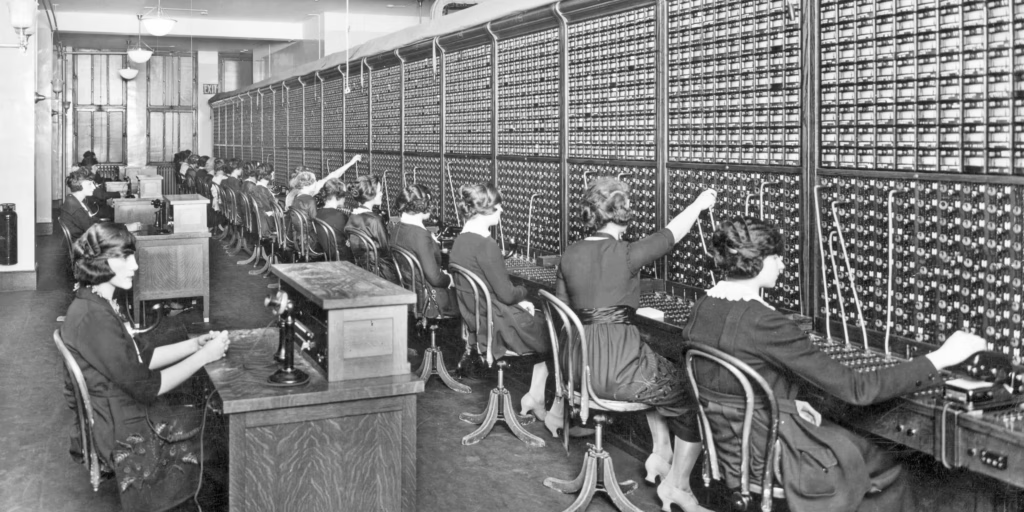

Some areas made the switch from the switchboard faster than others. The same was true of switching away from party lines. Rural areas were often the last to change and, as mentioned earlier, certain households — including my own — kept party lines for years or even decades longer than others.
From Switchboards to Cell Phones
The next big jump in telephone technology after the changeover from switchboards to direct calling was the invention of the cell phone. The first cell phones were invented in the 1970s, but they were nothing like the cell phones we all use today, and they also were not very popular. They were large brick-like handheld devices that needed their own carrying cases or bags.
Those early cell phones were practically useless compared to the ones we have today. They weighed enough to double as gym weights. Their batteries died quickly. Often, people who owned them had a lot of money. They installed them in their luxury vehicles more as decorations than functional devices. Could they make calls? Sure. Did they often? Probably not. The only exception was businesspeople who needed to communicate with clients constantly.
They used those early cell phones all the time, despite their short battery lives and spotty service signals.
Telephones on TV
Another interesting thing about telephones is many TV shows wouldn’t be the same
without them, especially classic TV shows. Some might not exist at all. For example, Lassie was one of my favorite shows as a kid.
I grew up watching it in reruns. Jenny (Florence Lake) was a switchboard-operator character who appeared 20 times in the series. Shows like Dragnet and I Love Lucy also highlighted early phone use often. Then there was Max’s shoe phone in Get Smart, which was iconic.
As for large brick-like cell phones, when I was growing up in the ’80s they suddenly popped up in a lot of my favorite shows and movies. However, the one that stands out in my mind most was Saved By the Bell. Zack Morris (Mark-Paul Gosselaar) was always using his personal cell phone to plot and scheme his way out of schoolwork. He also used it to con the principal, Mr. Belding (Dennis Haskins), on a regular basis.
The Evolution of Phone Designs
One of the things that makes phones and phone-related items interesting to collect is that the designs of phones have changed so much over the years. First there were the early, mostly wooden box-like phones that hung on walls. They had receivers attached by cords just long enough to reach someone’s ear. Later came metal and plastic models with other shapes, sizes, and features.
When I was a kid, I recall us getting a pair of video phones. One stayed downstairs in my grandparents’ apartment. The other was mailed to my aunt in Florida. The result is that we could see her picture while talking to her. It was the size of a postage stamp. We could
barely tell it was a person, never mind that it was her. Yet, we thought it was amazing.
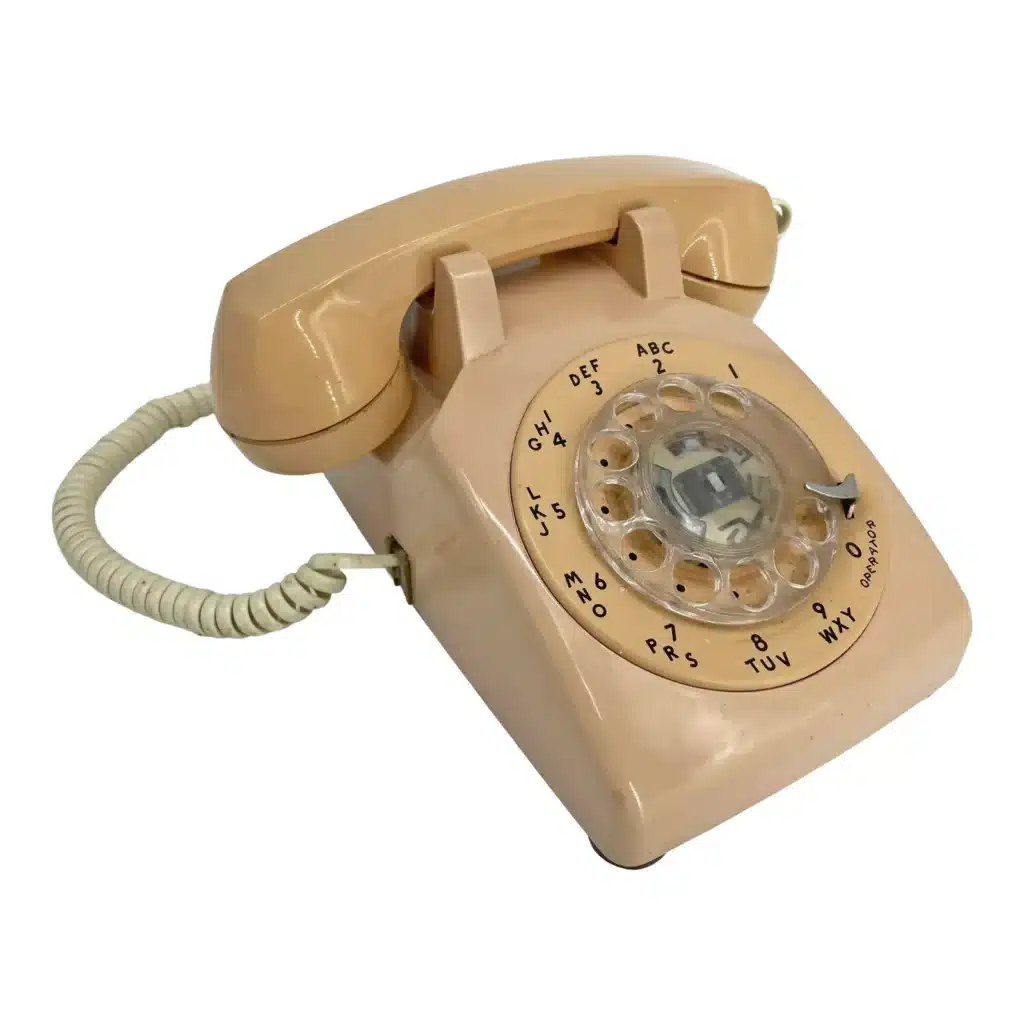
Of course, we also had rotary phones, and later we had push-button phones. Then came the great addition of completely cordless phones. We could walk all over the house with those, and we didn’t need to worry about a cord getting tied in knots. That was honestly as far as I thought phones would go in my teenage brain, but I was clearly wrong.
Today, we can not only take our smartphones everywhere, but they are small enough to fit in pockets or purses. They also are not just for calling anymore. Now we can watch full movies or TV shows on them. We can look anything up in a few seconds. We can even buy and sell things on them with a few swipes of our fingers. Alexander Graham Bell would be shocked if he could see us now.
Fun Telephones to Collect
If you want to collect telephones, you have a lot of options. What you find fun to collect all depends on your interests. I have collected Star Wars memorabilia since I was a kid and am the proud owner of a Wicket the Ewok telephone. Similarly, you can find telephones shaped like other popular movie and TV characters like Garfield the cat or Snoopy the dog if that interests you.

Another great option is collecting phones with unique colors or styles. For instance, the transparent telephones of the 1990s can be fun to look for. Companies like Conair and BellSouth made them. Generally, they were push-button, corded phones that teenagers like myself often had in their bedrooms.

The phones of the 1950s–1990s were also often colorful. Many times they were purchased to match color schemes of kitchens or living rooms. The Western Electric 500 is a good example. It was produced from the 1950s through the 1980s in a wide range of colors. Some of them included pink, yellow, and aqua. So many were made that you can still find them easily today in whatever colors you want to collect.
Another good category to collect is phones with specific themes. For instance, many phones were designed to be shaped like dogs or other animals. Some were also designed to look like foods, vehicles, or other everyday items.
Then there are phones that are themed around certain brands. Companies often created phones to advertise certain products, such as Coca-Cola. Phones with designs based on sports teams, movies, or music and pop-culture icons were also commonly made. You can still find them today at antiques shops and flea markets or online.
The Nostalgia of Phone Collecting
As you can see, the telephone has a long and interesting history. Every advancement along the way has highlighted a specific moment in time and helped to define it. From the first switchboards installed across the country to push-button novelty phones in the bedrooms of 1990s teenagers, every phone has a fun history that can bring back a lot of memories.
Smartphones can do a lot for us these days, but they can’t give us the irreplaceable feeling of nostalgia that early phones can provide. Keep that in mind the next time you see an old phone in an antiques shop and consider bringing it home.
Jessica Kosinski has been a freelance researcher and writer since 2001. She developed a passion for pre-1990s television and films as a child and she has never grown out of it. Recently, she turned that passion into a retro TV and film blog. Follow along with her at https://medium.com/@jkos_writing, as she dives deep into the characters, actors, quirks, and trivia that brought us some of the greatest films and shows in TV history and also discusses some of the more obscure films and shows most of us may have forgotten.


